
In short: Basement waterproofing in Greensboro, NC addresses water intrusion caused by Piedmont clay soil, which traps water against foundation walls in a “clay bowl” and builds hydrostatic pressure that forces water through cracks and joints. Typical costs run $2,460–$8,201 depending on interior versus exterior methods. A qualified contractor should diagnose the cause, not just quote a system, before recommending a fix.
Greensboro sits squarely in North Carolina’s Piedmont region, where a combination of dense clay soil, heavy seasonal rainfall, and older housing stock with below-grade living space makes basement water intrusion one of the most common structural complaints homeowners bring to local contractors. If you’re dealing with a damp basement, standing water after a storm, or a musty smell that won’t go away, understanding why it’s happening — and what actually fixes it — will help you evaluate contractors and avoid paying for the wrong repair.
Why basements flood and leak in the Piedmont Triad
The root cause in most Greensboro-area basements isn’t a single crack or a bad gutter — it’s the soil itself. The Piedmont region sits on clay-rich soil that behaves very differently from the sandy soils found toward the coast or the rockier soils in the mountains. Clay absorbs water and expands significantly when saturated, then shrinks and cracks as it dries out. That expansion-contraction cycle repeats every time it rains hard and then dries out again, and over years it puts sustained lateral pressure on basement walls (Carolina Basement Systems, “Expansive Soils & Foundation Repair,” carolinabasementsystems.com).
This is compounded by what foundation engineers call the “clay bowl effect.” When a basement is excavated for construction, the soil used to backfill around the foundation is looser and more permeable than the dense, undisturbed clay beyond it. That backfill zone acts like a bowl that collects water around the foundation walls instead of letting it drain away naturally — and the trapped water generates hydrostatic pressure, a sideways force against the wall that foundations aren’t designed to resist (they’re engineered for vertical load, not lateral push). When hydrostatic pressure builds faster than it can dissipate, it forces water through hairline cracks, block cores, and cove joints (where the wall meets the floor), and in more severe cases it bows or cracks the wall itself.
Rainfall volume matters here too. Greensboro averages about 45.9 inches of precipitation a year across roughly 108 wet days; High Point averages around 48.3 inches, and Winston-Salem about 43.2 inches (currentresults.com, NOAA-based climate normals). That’s meaningfully wetter than the U.S. average of roughly 30 inches, and Piedmont rainfall tends to arrive in bursts — thunderstorms and slow-moving frontal systems — rather than as steady drizzle, which is exactly the pattern that overwhelms soil drainage and spikes hydrostatic pressure quickly. Add in the Triad’s humid subtropical summers, and basements that aren’t actively leaking can still develop condensation, efflorescence (the white mineral deposits left behind as water evaporates through masonry), and mold from ambient moisture alone, even without a visible water entry point.
What basement waterproofing actually involves
“Waterproofing” covers several genuinely different repair approaches, and the right one depends on whether the goal is managing water that’s already gotten in or stopping it from getting in at all.
Interior water management is the most common and least invasive approach. It includes an interior perimeter drain (sometimes called a French drain or weeping tile system) installed along the interior footing, which channels water that seeps through walls or the wall-floor joint into a sump basin before it can pool on the floor. A sump pump then moves that water out and away from the foundation. This is typically paired with sealing visible cracks — usually via epoxy or polyurethane injection, which fills the crack from the inside out rather than just patching the surface — and sometimes a vapor barrier or dehumidifier to control ambient humidity. Interior systems don’t stop water from entering the wall assembly; they manage it once it’s inside.
Exterior waterproofing addresses the source directly. It involves excavating around the foundation down to the footing, applying a waterproof membrane (liquid-applied rubber, sheet membrane, or modified asphalt) directly to the exterior wall, and installing an exterior French drain with gravel and a perforated pipe that intercepts groundwater before it reaches the wall at all. This is significantly more disruptive and expensive than interior work — it typically means digging up landscaping, walkways, or in some cases porches — but it’s the only method that actually keeps hydrostatic pressure from building against the wall in the first place, rather than just relieving it after the fact.
Most reputable Greensboro-area contractors will assess crack pattern, wall bowing, grading, and gutter/downspout performance before recommending interior versus exterior work, since exterior excavation is warranted for structural movement or chronic high water tables, while interior systems are often sufficient for seasonal seepage.
What it costs
National data is the most reliable benchmark available, since basement waterproofing costs aren’t broken out separately by region in published industry data. According to Angi’s 2026 cost data, homeowners pay $2,460–$8,201 for a typical basement waterproofing project, averaging around $5,239, with a full range of $600 for minor interior sealing up to $15,000 for a complete interior-and-exterior system (angi.com). Fixr.com reports a similar range of $3,000–$10,000, or roughly $3–$10 per square foot (fixr.com).
Broken down by method, expect roughly:
- Waterproofing paint/sealant: $1–$8 per sq. ft.
- Epoxy crack injection: $250–$1,500 per crack
- Interior perimeter drain: $40–$120 per linear foot
- Exterior French drain: $10–$100 per linear foot
- Sump pump installation: $600–$2,500
- Full exterior excavation and membrane: averages around $7,000, versus roughly $3,000 for interior-only work (Angi; Fixr.com)
Local pricing in the Triad will land within these national ranges, with exterior jobs trending toward the higher end where excavation hits rock, mature landscaping, or tight urban lots common in older Greensboro neighborhoods.
Want a number specific to your project instead of a national range? Try our free Cost Estimator — takes about 10 seconds.
Permits and code requirements in Greensboro and Guilford County
Under the North Carolina Residential Code (based on the IRC, Section R406), foundation walls enclosing below-grade space must be dampproofed at minimum, but full waterproofing — a higher-spec membrane system — is required by code “in areas where a high water table or other severe soil-water conditions are known to exist” (up.codes / NC Residential Code Chapter 4). Given the Piedmont’s clay soil and hydrostatic pressure issues described above, this standard is directly relevant to exterior waterproofing work on Greensboro homes.
The City of Greensboro requires a building permit for “the construction, reconstruction, alteration, repair, movement to another site, removal, or demolition of any building or structure,” which covers structural foundation crack repair and wall stabilization work (greensboro-nc.gov, Building Permits FAQ). Plumbing permits are separately required for changes to drainage systems and connected fixtures, which applies to sump pump installation and discharge line work. For homeowners planning exterior excavation, it’s worth knowing that Guilford County requires a grading/land-disturbance permit only when disturbed area reaches one full acre (guilfordcountync.gov, Grading Permit) — a typical single-home perimeter excavation falls well under that threshold, so most exterior waterproofing jobs won’t trigger a separate county grading permit, though the city building and plumbing permits still apply. Because permit requirements can vary by project scope, confirm specifics with Greensboro Development Services (336-373-2155) before work begins.
Before you hire: what to ask
A few questions separate a durable repair from a callback waiting to happen:
- Ask what’s causing the water, not just how they’ll remove it. A contractor who inspects grading, gutters, and soil before proposing interior drainage is diagnosing the problem; one who quotes a system over the phone isn’t.
- Ask whether they’re recommending interior or exterior work, and why. Given the cost gap, you want a clear structural reason (wall bowing, chronic water table issues) if they’re recommending the more expensive exterior excavation.
- Ask about the warranty terms in writing — specifically whether it covers the sump pump (a mechanical part that eventually fails) separately from the drainage system itself.
- Confirm they’ll pull the required city/county permits, rather than treating the job as cosmetic work that doesn’t need inspection.
- Ask for local references from Piedmont Triad clay-soil jobs specifically, since a contractor’s experience with sandy-soil markets doesn’t always transfer.
Basement waterproofing contractors in Greensboro
As of this writing, 15 basement waterproofing contractors serving Greensboro are listed below, sourced from public business listings and grouped by real service area — not a generic nationwide roster.
Paul Davis Restoration Triad East
- 108 S Walnut Cir, Greensboro, NC 27409, USA
- (336) 707-3018
- July 14, 2026
RestoPros of The Triad
- 107 Creek Ridge Rd B, Greensboro, NC 27406, USA
- (336) 743-2025
- July 14, 2026
RestorePro Reconstruction Inc.
- 3408 W Wendover Ave A, Greensboro, NC 27407, USA
- (336) 600-4343
- July 14, 2026
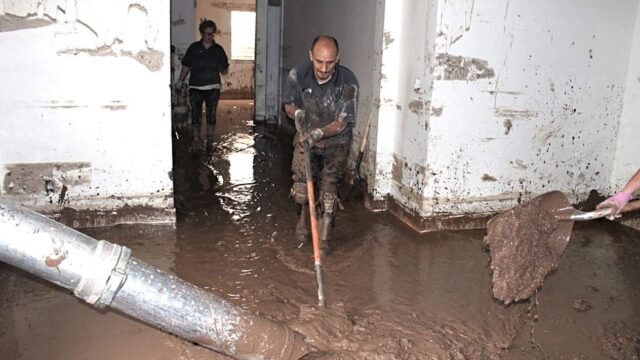
Magazie Water Damage
- 208 N Regan St, Greensboro, NC 27401, USA
- (336) 866-6182
- July 14, 2026
Sovanoca Construction Advisors
- 7 Dundas Circle Suite G, Greensboro, NC 27403, USA
- (336) 500-3171
- July 14, 2026
Affordable Waterproofing & Foundation Repair
- 1027 Forsyth Line Rd, Rural Hall, NC 27045, USA
- (336) 287-5160
- July 14, 2026
Related reading
If cracks, settling, or other structural warning signs (not water) are what brought you here, our Foundation Repair in Greensboro page covers that in depth. Many Piedmont homes have crawl spaces rather than basements — if that describes yours, see our Crawl Space Encapsulation in Greensboro page instead. For general questions about how listings are sourced and verified, see our FAQ. See our full Piedmont Triad data report for how this category compares across all four service types and every town we cover.